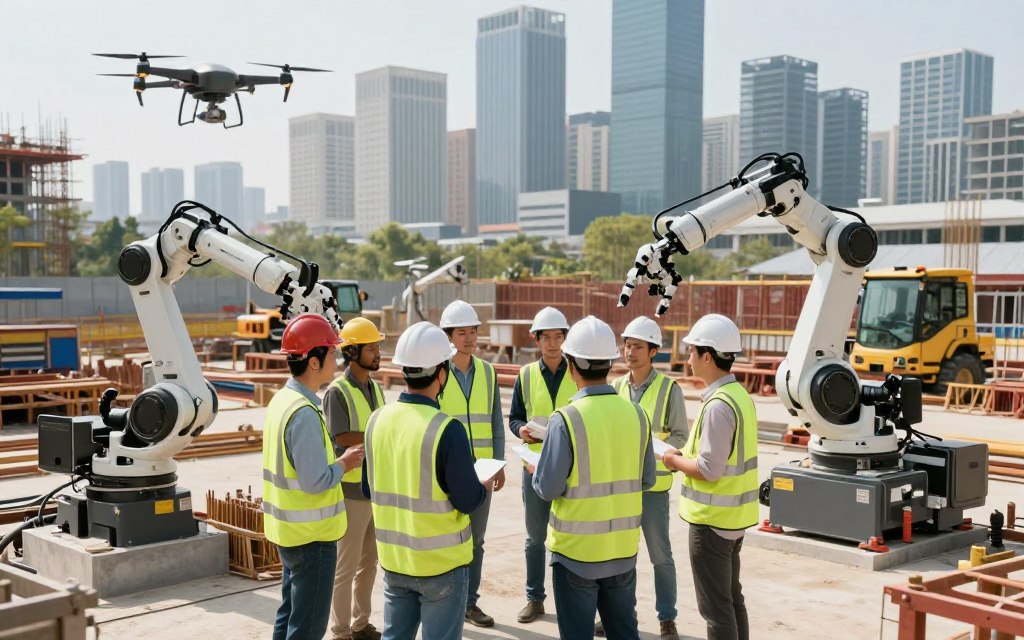

The question of whether AI will replace construction workers has sparked debate. Technology may handle some tasks, but it will not remove the entire workforce in the near future. Construction includes material handling, skilled craftsmanship, and project management.
This article examines the current state of AI in construction in the United States. It explores jobs most at risk from automation and roles that still depend on human expertise. It also covers construction automation, its economic and safety risks, workforce training, and regulation.
Automation adoption will vary by project type, company size, labor availability, and site conditions. We should study job changes instead of exaggerating claims about replacing the entire workforce. For more detail, read this insightful article on AI and its impact on construction and the future of construction jobs.
Key Takeaways
- Automation is set to transform specific tasks rather than eliminate the workforce.
- Current job roles vary in their exposure to automation risks.
- Human judgment remains crucial in many construction tasks.
- Economic and safety considerations are vital in adopting new technologies.
- Workforce training will be essential for adapting to technological changes.
The Current State of AI in the US Construction Industry
The US construction industry is changing as artificial intelligence brings new tools. AI construction technology improves efficiency, safety, and decisions on many projects. It automates routine tasks and turns data into useful insights for construction teams.
Computer vision is a leading way teams use AI in modern construction projects. It supports safety checks and progress tracking, helping teams spot hazards in real time. Machine learning algorithms forecast schedules and costs, helping managers manage resources and budgets.
Generative design and digital twins are becoming valuable tools. They help architects and engineers create and view complex structures before work begins. AI also improves Building Information Modeling (BIM) based coordination by connecting project elements.
Investment in the construction technology market remains strong. Venture capital is flowing into startups focused on construction robotics and predictive analytics construction. Corporate technology spending is also rising as larger firms adopt new solutions to stay competitive.
AI adoption is not equal across the construction industry. Large contractors and major infrastructure projects often have resources for advanced technologies. Smaller firms may face costs, training needs, and poor data quality.
Despite these barriers, AI usually supports workers and managers. It improves visibility and decision-making without taking full control of projects.
Construction Jobs Most at Risk of AI Automation
As AI grows in construction, some roles face greater automation risk. This focus on construction jobs at risk helps workers prepare for the future.
Heavy Equipment Operation and Machine-Controlled Tasks
Heavy equipment operation faces major changes as AI advances. Automated construction equipment and autonomous construction vehicles can grade, excavate, and haul. GPS guidance and telematics reduce the need for manual control.
Operators may not disappear, but their roles will likely change. Many will supervise machines remotely. They will need skills in technology management and equipment maintenance.
Surveying, Layout, and Site Inspection Roles
AI is changing surveying and site inspection roles. Drones, laser scanning, and photogrammetry now handle tasks once performed by people. These tools improve accuracy and efficiency in layout and inspection.
Human oversight remains essential. Workers must learn to operate and troubleshoot these advanced systems. These skills will help them remain valuable in a technology-driven workplace.
Repetitive Manual Labor and Material Handling
Repetitive manual labor also faces automation. Robotics increasingly supports bricklaying assistance, rebar tying, and drywall finishing. Automated systems can also manage site deliveries and track inventory, improving material handling.
Despite these advances, uneven terrain and changing weather may limit automation’s effectiveness. Workers who operate and oversee these technologies will remain in demand. Those doing predictable tasks may face displacement, making retraining and transition planning vital against AI job displacement.
Construction Roles AI Cannot Easily Replace
Despite AI advances, some construction roles remain essential because they require human ingenuity, skill, and practical experience. The industry depends on technical knowledge and real-world judgment that machines cannot fully provide.
Skilled Trades Requiring Human Craftsmanship
Skilled construction trades, including electricians, plumbers, and masons, require construction craftsmanship that AI struggles to match. These roles often involve several human strengths:
- Dexterity and Precision: Tasks such as wiring, piping, and masonry demand a high degree of manual skill.
- Adaptability: Workers frequently encounter unexpected challenges that require quick thinking and improvisation.
- Tacit Knowledge: Many skilled trades rely on years of experience and subtle judgment that AI cannot easily encode.
Project Management and On-Site Decision Making
Effective construction project management depends on human skills in construction. Project managers coordinate many connected tasks and make decisions that keep work moving.
- Sequencing and Scheduling: Understanding how different tasks interrelate is crucial for timely project completion.
- Conflict Resolution: Addressing disputes between subcontractors requires negotiation and interpersonal skills.
- Real-Time Adjustments: Weather changes or site discoveries necessitate immediate decision-making that AI cannot handle.
Client Communication and Custom Design Work
Client interaction is another area where human expertise matters. Custom design work depends on careful listening, clear communication, and sound judgment.
- Stakeholder Consultation: Understanding client needs and preferences is essential for project success.
- Expectation Management: Project leaders must effectively communicate timelines and budget constraints.
- Aesthetic Judgment: While AI can generate options, final decisions often rely on human taste and experience.
AI can assist with many construction tasks, but skilled craftsmanship, project management, and client communication still need human workers. These roles show the lasting value of human expertise, judgment, accountability, and communication in construction.
Real-World Examples of AI Adoption on US Construction Sites
Leading U.S. construction firms now use AI to improve project efficiency and safety. These real-world AI construction examples set new industry standards.
Bechtel and Autonomous Equipment Deployment
Bechtel leads in AI in construction through autonomous equipment. Bechtel AI construction systems support large infrastructure projects. Autonomous vehicles transport materials, reducing human error and improving efficiency.
This approach includes:
- Problem Solved: Reducing manual labor and enhancing safety.
- Data Required: Real-time data for navigation and obstacle detection.
- Human Oversight: Operators monitor systems to ensure safety.
- Measurable Outcomes: Increased productivity and lower accident rates.
Turner Construction and AI-Powered Project Management
Turner Construction technology uses AI-powered project management tools to optimize operations. These tools detect schedule risks, search documents, and forecast costs. Early warnings help project teams make informed decisions and achieve successful outcomes.
Key features of Turner’s technology include:
- Safety Analytics: Enhancing on-site safety protocols.
- Automated Reporting: Streamlining communication and documentation.
- Issue Tracking: Quickly addressing project challenges.
Skanska and BIM Integration With AI
Skanska uses AI with Building Information Modeling (BIM) to improve construction. Skanska BIM supports design reviews, clash detection, and progress monitoring. Digital twins improve lifecycle planning from project start to completion.
Skanska’s approach focuses on:
- Clash Detection: Identifying design conflicts before construction.
- Progress Monitoring: Real-time updates on project status.
- Data Utilization: Leveraging analytics for better decision-making.
Economic and Safety Risks of AI in Construction
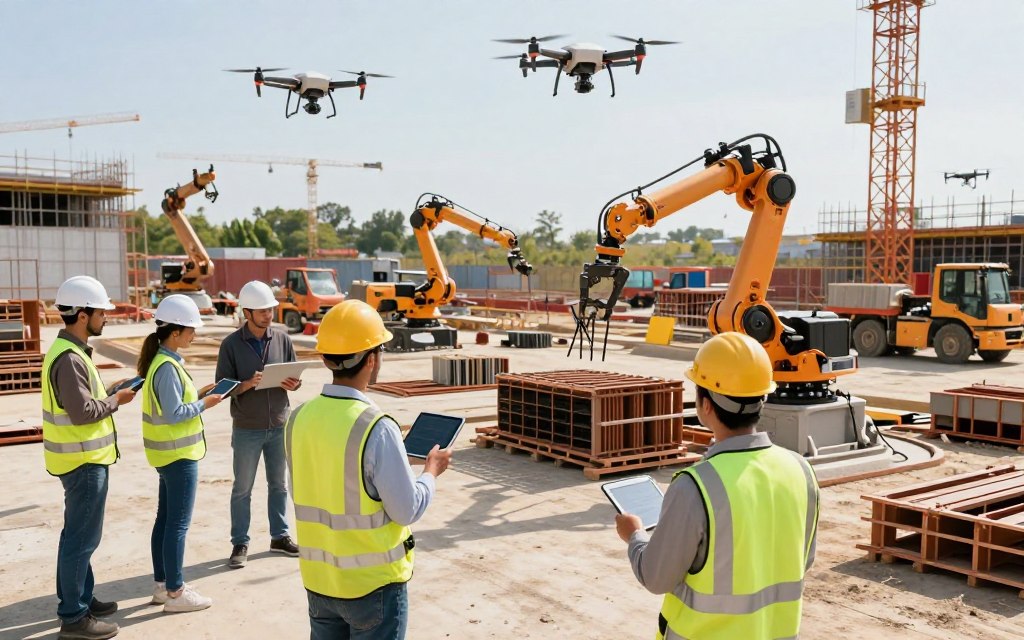
AI risks in construction include serious economic and safety concerns. AI may improve efficiency and productivity, but its effects can reach every part of the industry. Stakeholders need to understand these risks before adopting new systems.
Job Displacement and Wage Impact Concerns
The most urgent issue is construction workforce displacement. Machines may replace repetitive tasks, causing many entry-level jobs to disappear. Lower labor demand could also pressure wages in remaining roles.
AI can create new technology-focused jobs, but the transition may be difficult. Workers may need retraining, which can create barriers for many people. Uneven productivity gains also raise concerns about workforce fairness.
Cybersecurity and Data Privacy Risks
AI growth increases construction cybersecurity threats. Connected equipment and cloud systems are increasingly open to cyberattacks. A hacked project management system could expose BIM files and worker information.
Contractors must strengthen data governance to reduce these threats. They should use role-based access controls, review vendors carefully, and create incident response plans. Employees also need cybersecurity training to protect sensitive information.
Safety Benefits and Potential Hazards of AI Systems
AI can improve AI construction safety through proximity alerts and fatigue monitoring. These tools can automate inspections and predict maintenance needs, creating safer worksites. However, AI systems can also create hazards.
Inaccurate computer vision or sensor failures can create dangerous situations. Algorithmic bias and poor human-machine interfaces may encourage automation complacency. AI must supplement, not replace, qualified safety professionals and established safety protocols.
Workforce Skills Needed to Work Alongside AI
Preparing the construction workforce for an AI-driven future requires essential skills and training. Construction workforce training helps workers use the right tools as AI becomes central to construction work.
First, digital literacy is crucial when building digital skills for construction workers. Workers must use project management platforms, read dashboards, understand Building Information Modeling (BIM) viewers, and enter accurate field data. They must recognize alerts and know when an automated recommendation may be unreliable.
Digital Literacy and Data Analysis Skills
Foundational data analysis skills are also increasingly important. Workers should interpret trends, compare planned versus actual progress, identify anomalies, and explain findings to project leaders. These skills can significantly improve project outcomes.
Technical Training for AI-Operated Equipment
AI equipment training is another vital part of preparing the workforce. Workers must learn to operate AI-controlled equipment, including machine-control systems, robotics, and drones. They also need sensor and remote monitoring knowledge to support safety and efficiency.
Training should focus on hands-on practice, not only software demonstrations. It should cover preventive maintenance, software updates, and emergency shutdown procedures. Practical experience helps workers supervise and maintain AI systems on the job site.
Soft Skills That Complement Automation
As routine tasks become automated, soft skills will become more valuable. Communication, teamwork, adaptability, critical thinking, and leadership help people coordinate with machines, explain technology, and decide when systems fail.
Partnerships among contractors, unions, community colleges, manufacturers, and apprenticeship programs can create clear career paths into technology-supported roles. This collaboration will prepare the future construction workforce to thrive alongside AI.
| Skill Type | Importance | Training Methods |
|---|---|---|
| Digital Literacy | Essential for navigating AI tools | Workshops, Online Courses |
| Data Analysis | Critical for project management | Hands-on Training, Simulations |
| Technical Skills | Necessary for operating equipment | Apprenticeships, Manufacturer Training |
| Soft Skills | Enhances teamwork and decision-making | Team-Building Exercises, Leadership Programs |
Regulatory and Ethical Considerations in the US
AI advances raise regulatory questions about ethical AI in construction. Employers must ensure AI systems follow workplace safety and employment laws. OSHA sets safety expectations, including hazard checks, worker training, and protective measures.
AI-enhanced monitoring adds safety control, but it must not replace established practices. Employers remain responsible for safe operations, whatever technology they use. Therefore, OSHA AI safety standards must evolve with new technology.
OSHA Guidelines and AI-Enhanced Safety Standards
OSHA guidelines shape how builders use AI on construction sites. They keep safety first while supporting innovation. Employers must follow these standards as AI tools become more common.
Labor Union Responses and Worker Protections
Construction labor unions and automation raise concerns about jobs. Surveillance, deskilling, and job losses lead these discussions. Unions seek collective bargaining agreements with notice requirements, retraining commitments, and wage protections to protect workers’ rights.
Liability and Accountability in AI-Driven Projects
When AI contributes to a construction-site incident, liability can be hard to determine. Owners, general contractors, subcontractors, or software providers may share responsibility. Clear contracts, audit trails, and human approval requirements are essential for accountability in AI liability construction cases.
| Aspect | Responsibility | Potential Liabilities |
|---|---|---|
| AI Recommendations | Contractors | Incorrect outcomes |
| Autonomous Machines | Equipment Manufacturers | Defective equipment |
| Data Privacy | Software Providers | Data breaches |
As laws change, all stakeholders must track current regulations and court decisions. For more insight into AI’s effect on server status, visit this resource.
Future Trends: Will AI Replace Construction Workers?
The construction industry is nearing major change because of artificial intelligence. To understand the future of AI in construction, we must study its effects on jobs and practices over the decade. Some tasks may become automated, but human labor will remain essential to construction.
Predictions for the Next Decade
Automation in the next decade may cover scheduling, estimating, documentation, and equipment guidance. Full AI autonomy on construction sites seems unlikely because sites vary physically and still need human oversight.
Hybrid Workforces: Humans and AI Collaboration
The future will likely bring a hybrid workforce. Craft professionals, engineers, and project managers will use AI systems for recommendations, alerts, and simulations. Human-AI collaboration will improve decisions while keeping human-in-the-loop controls for safety-critical choices.
Emerging Technologies Reshaping the Industry
Several emerging technologies will reshape construction. Generative design, digital twins, and autonomous equipment will become more common. Robotics, computer vision, and 3D printing will also improve efficiency and productivity.
| Technology | Impact on Construction | Adoption Rate |
|---|---|---|
| Generative Design | Optimizes building design for performance | High |
| Digital Twins | Improves project management and monitoring | Medium |
| Autonomous Equipment | Enhances efficiency in operations | Growing |
| 3D Printing | Reduces material waste and costs | Emerging |
AI probably will not replace construction workers completely, but it will change their work. Repetitive tasks may decline, but demand will grow for skilled workers who manage data and operate advanced equipment. This change reflects construction industry trends and makes continuous learning and adaptation important.
Conclusion
Construction is changing as artificial intelligence advances. Many ask, will AI replace construction workers? The answer is more complex.
AI will change how people work, but it will not likely replace them completely. The construction jobs future will depend on human skills, including adaptability, craftsmanship, and critical decisions.
Automation will affect predictable, repetitive tasks, such as equipment operation and inspections. These tasks offer the greatest potential for responsible construction automation. Skilled trades and complex project management will still need human oversight, while people and smart systems shape the industry’s future.
As the industry adapts, safety and data governance must remain priorities. Workers should help make technology decisions so their needs are met. These steps let construction embrace innovation while protecting its workforce.


 By
By