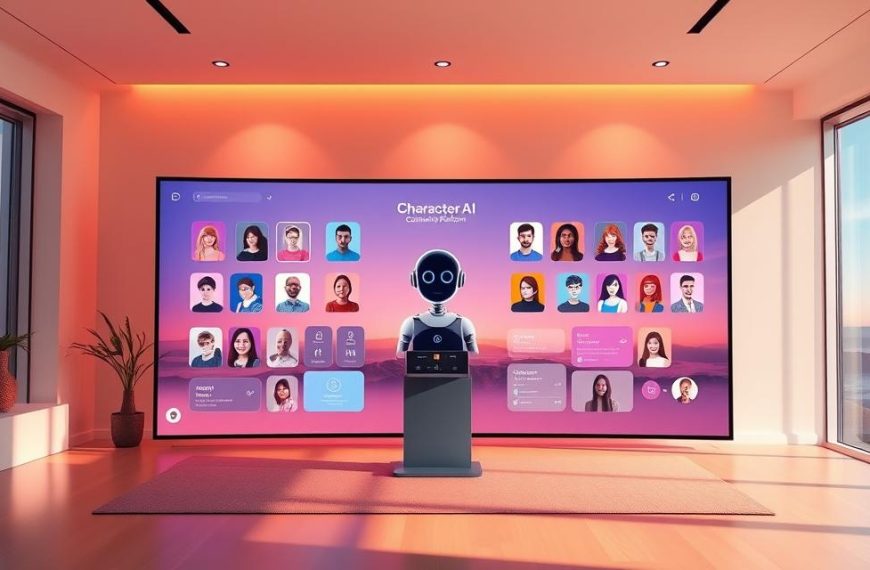


For centuries, stories were one-way. We read books, watched films, and admired characters from afar. Now, a big change is happening.
Technology is making us more active in stories.
AI character chat is at the centre of this shift. It lets you talk directly to your favourite characters. This is a new way to enjoy stories and be creative.
This isn’t just fun. It also gives us a special feeling of digital companionship. It’s a chance for personal talks, exploring feelings, and making up stories.
This article will dive into the world of AI character chat. We’ll see how it’s changing how we connect with stories and each other.
Key Takeaways
- AI character chat transforms passive storytelling into active, two-way conversations with fictional or historical figures.
- Advanced Large Language Models (LLMs) combined with prompt engineering create convincing digital personas with unique personalities and backstories.
- Platforms like Character.AI and ChatFAI offer diverse opportunities for interaction, from community-driven hubs to narrative-focused experiences.
- This technology serves creative purposes for writers and role-players, providing brainstorming tools and immersive solo adventures.
- Beyond entertainment, AI character chats offer significant educational value and support for social skill development and self-reflection.
- Ethical considerations regarding privacy, copyright, and bias are crucial for the responsible development and use of AI character chat technologies.
From Passive Reading to Active Dialogue
Imagine stepping out of the story and questioning your favourite characters. For years, we’ve just read or watched without changing the story. This is passive consumption, where we only observe and interpret.
Fans have always wanted more from their favourite stories. They write their own tales, discuss plot points, and dream up new scenarios. This shows a desire to go beyond just watching and to participate.
AI character chat brings a new level of interaction. It turns one-way storytelling into a two-way conversation. You can ask questions and get answers, making the story your own.
This new way of storytelling gives you power. In books, characters always do the same things. But with AI, you can try new ideas and see how they work out. It’s like co-creating a story, where you and the character are both part of it.
This shift from just reading to talking back feels natural. It’s like how we talk to each other in real life. AI character chat lets us connect with stories in a new way. It’s not replacing old stories, but adding a new layer to them. For more insights into how these platforms facilitate dialogue, explore our guide on [unlocking digital dialogue](http://characterai.uk/unlocking-digital-dialogue-the-power-of-ai-chatbot-conversations-archive-in-2025/).
What is AI Character Chat?
An AI character chat is a special kind of chatbot. It’s designed to be a certain character or historical figure. Unlike regular chatbots, it’s made for long, open conversations.
Users talk to it like they would to a friend. They don’t just ask for information. They chat with a digital version of their favourite hero or a historical figure.
This makes the interaction more personal and engaging. It’s a big change from just getting answers to questions.
The magic of AI character chat is in creating a believable character. It’s not just about talking to a machine. It’s about feeling like you’re really talking to someone.
This feeling comes from how we interact with these characters. It’s changing the way we see and talk to digital beings.
The Pillars of a Convincing Digital Persona
To make an AI character believable, it needs more than just a name. It needs to feel real. This comes from several key areas working together.
Developers carefully create these characters. They decide on traits that guide every response. This makes the character feel real and consistent. For deeper understanding, consider how [AI character creation and design tips](http://characterai.uk/ai-character-creation-and-design-tips/) contribute to this realism.
The table below shows what makes a believable AI character.
| Component | Description | Impact on User Experience |
|---|---|---|
| Personality & Core Motivation | The character’s defining attitudes, values, and driving goals. Is they cynical, heroic, curious, or mischievous? What do they fundamentally want? | Creates predictable yet interesting behaviour, making the character feel consistent and “real”. |
| Backstory & Knowledge Base | The character’s history, memories, and the limits of what they “know.” A medieval knight wouldn’t understand modern slang unless specified. | Provides context for responses and allows for deep, lore-specific conversations that enhance immersion. |
| Speech & Linguistic Patterns | Unique vocabulary, syntax, catchphrases, and formal or informal speech registers. This includes accents, slang, and technical jargon. | Makes the character instantly recognisable and adds a rich layer of authenticity to every exchange. |
| Emotional Consistency & Reactivity | The character’s ability to express appropriate emotions and remember the emotional tone of the ongoing conversation. | Fosters a sense of mutual understanding and makes the dialogue feel dynamic and responsive to the user’s input. |
Evolving Interactions: Text, Voice, and Beyond
The core of AI character chat is text-based dialogue. It lets users explore complex stories and have detailed conversations. The character’s personality shines through in the writing.
Then, there’s voice interaction. This adds a new level of realism. Users can talk to the character, feeling its emotions and tone.
Looking ahead, we’re moving towards multimodal interaction. Imagine talking to a digital Socrates in a virtual Athens. These new technologies will make the digital persona even more real and immersive.
The Mechanics Behind the Conversation
AI character chat is a complex mix of data, algorithms, and creativity. It feels personal and smooth, thanks to advanced technologies working together.
These systems turn a simple text box into a way to interact. Let’s look at the main parts that make it work.
The Role of Large Language Models (LLMs)
At the core of AI chat is a large language model (LLM). Imagine an LLM as a digital brain, trained on vast amounts of text.
It learns about word patterns, grammar, and context. When you type, it guesses the most likely words for a reply.
This guessing makes the chat feel real and natural. The model stays in character, whether you’re discussing strategy or sharing a joke.
The context window is key. It’s how much the LLM remembers of the conversation. Advanced models keep this context well, making the chat seem continuous.
Crafting the Character: Prompt Engineering and Datasets
An LLM is powerful, but generic. Prompt engineering adds a unique touch. It’s about creating detailed instructions for the LLM.
Developers and users create a character profile. It includes personality traits, speech patterns, and more. This prompt tells the model who it is.
Curated datasets also play a role. These are texts specific to the character, like script lines or quotes.
Training the model on this data makes it mimic the character’s voice. This turns a general LLM into a specialised chat partner.
This mix of technical skill and creativity brings our favourite characters to life online.
Initiating Your First AI Character Chat
Starting your journey with AI-driven stories is exciting. This guide will help you set up and start conversations that feel real and fun.
Selecting a Platform and Finding Your Character
Choosing the right AI chat platform is key. There are many options, each with its own features and characters. Think about what you like to find in a platform.
Look at the size and quality of the character library. Places like Character.AI have millions of AI characters. PolyBuzz has over 20 million. A bigger library means more choices.
Consider these platform features:
- Accessibility: Is it free, freemium, or subscription-based?
- Interaction Modes: Does it support text, voice, or image generation?
- Community Tools: Can you create and share your own characters?
- Privacy Policies: How is your conversation data handled?
Explore different platforms. Many let you see public characters before signing up. Look for detailed descriptions and good user ratings for better chats. For a comprehensive overview, read [What is Character AI: A Complete Guide](http://characterai.uk/what-is-character-ai-a-complete-guide/).
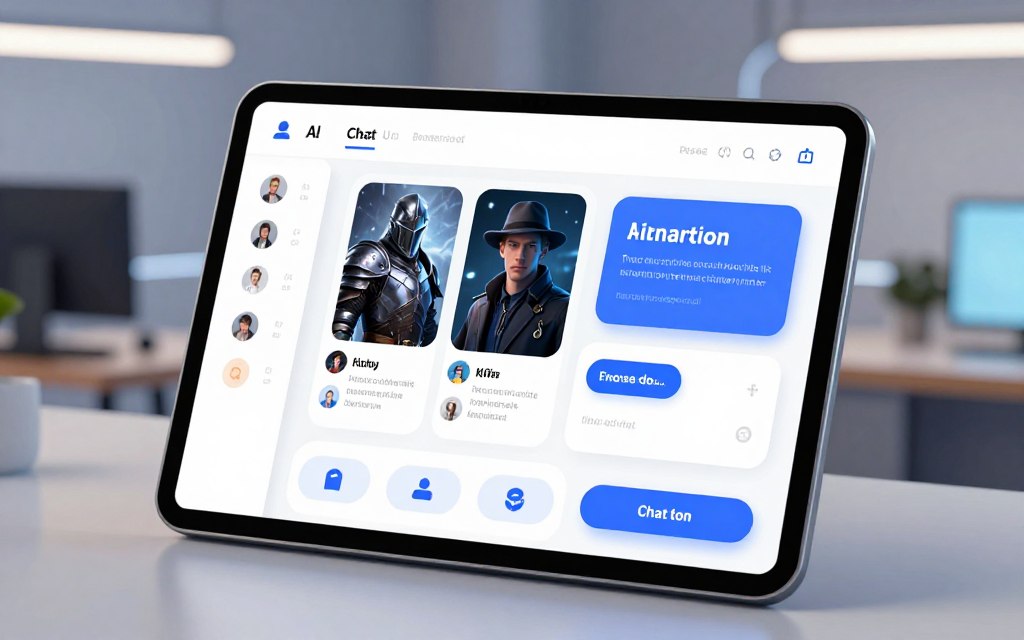
Strategies for Rich and Engaging Dialogue
Once you’ve picked a character, the fun starts. To have a great chat, start by acting as if you’re already in their world.
Start in-character immediately. Say something that fits their world. For a detective, say, “I’ve got a new case file on my desk that’s got me stumped.” This sets the scene.
Provide detailed narrative context. AI characters forget things in one session. Remind them of important details. Say, “Remember, we’re searching for the missing artefact in the library’s east wing,” to keep the story going. Learn more about [how to start conversations with Character AI](http://characterai.uk/character-ai-chat-how-to-start-conversations/).
Use specific prompts to make the chat better:
- “Describe what you see as we enter the room.”
- “What is your character’s immediate emotional reaction to this news?”
- “Let’s have a debate about the moral implications of that decision.”
Guide the conversation if it gets vague. Use new prompts to keep it on track. The best chats are when you work together to tell a story.
Don’t be afraid to try new things. Experiment with different styles and plot twists. This is where AI chat platforms really come alive.
Leading AI Character Chat Platforms
Choosing the right service is key to a great AI chat experience. There are many platforms, each with its own strengths. They range from big, user-driven hubs to small, story-focused tools. Knowing these options helps you pick the best place for your chats.
Character.AI: The Community-Driven Hub
Character.AI is a top choice for AI chats. It has a huge, active community and is easy to use. You can chat with many characters or create your own easily.
The platform is great for being creative and chatting freely:
- Text or Talk: You can type or use voice for a more real feel.
- Intuitive Creation Tools: It’s easy to make a character without coding.
- Vast Public Library: There’s a huge collection of characters from all genres.
Character.AI is perfect for casual roleplay and exploring many digital personas. For those interested in its evolution, check out [Old Character AI: How the Platform Has Changed](http://characterai.uk/old-character-ai-how-the-platform-has-changed/).
ChatFAI: Tailored for Narrative and Fandom Exploration
ChatFAI focuses on depth, not just breadth. It’s great for long stories and fandom chats. It helps keep stories consistent, making chats feel like real adventures.
This makes ChatFAI great for writers and fans. It supports complex stories and character growth. It’s for those who see AI chat as a creative tool, not just fun.
Additional Services: Replika, Kajiwoto, and More
There are many more services beyond these two. Each offers something special for different needs.
Replika is unique as a personal AI friend. It’s not about characters but forming a bond. It helps with mindfulness and self-reflection through chat.
Kajiwoto lets you create your own AI “pets”. You can design their look and personality. It’s about nurturing a unique digital friend.
Other services like PolyBuzz offer free, private chats with many characters. For a wide range of options, check out lists of AI characters. They can help you find platforms that match your interests. For a broader perspective on similar tools, consider [AI Character Generator Tools and How to Use Them](http://characterai.uk/ai-character-generator-tools-and-how-to-use-them/).
The most important thing is to find a platform that fits your chat goals. Whether it’s community, stories, companionship, or customisation, there’s something for everyone.
Creative Applications for Writers and Role-Players
For writers and role-players, these digital personas are more than fun. They are a creative partner for the imagination. This technology lets users move from just watching to actively creating stories and characters.
Bypassing Creative Block with AI Collaboration
Ever felt stuck staring at a blank page? AI character chat can help. It acts as a brainstorming buddy, asking questions you might not think of. This can uncover your characters’ true motives and make them more real.
The AI can also start conversations between characters or suggest new plot twists. This outside view can show you your story in a fresh light. It’s a safe space to try new things without worrying about it being final.
This approach is great for beating writer’s block. By talking with your AI character, you get feedback that’s honest and unbiased. This can get your creative juices flowing again, turning a dull scene into a lively conversation.
Facilitating Immersive Solo and Group Role-Playing
AI characters change the game for solo and group role-playing. Solo players can have adventures with an AI guide. The AI can describe settings, control NPCs, and react to your choices instantly.
In group play, the AI can manage a character that stays the same across sessions. This lets the human game master focus on the big picture. The AI’s character can give clues, offer side quests, or add humor, making the game more engaging.
This tech makes complex roleplay easier to enjoy. It’s perfect for creating your own epic or adding to a friend’s game night. AI is a flexible tool for telling stories. For a comprehensive look, see [The Best AI Chat Character Platforms for Roleplaying](http://characterai.uk/the-best-ai-chat-character-platforms-for-roleplaying/).
- Solo Adventures: Full narrative control with an AI as your guide and cast.
- Group Support: Persistent NPCs that remember interactions across sessions.
- Rapid Prototyping: Test new campaign ideas or character concepts quickly.
The uses of this tech go beyond just fun. It offers a balance of structure and freedom, letting stories go wherever your imagination takes them.
Educational and Developmental Potentials
AI chat platforms are more than just fun. They are becoming key tools for learning and personal growth. They help us learn in a fun, interactive way, without the pressure of real life.
Conversing with History and Practising Languages
Talking to AI characters can make history lessons exciting. Imagine having a chat with Winston Churchill or Cleopatra. You can ask them anything, learn about their thoughts and times.
For language learners, these platforms are a great place to practice. You can chat with a character in your target language. The AI helps you improve your skills, making it easier to talk in real life.
Supportive Practice for Social Scenarios and Self-Reflection
AI chats are perfect for practicing important conversations. You can try out job interviews or tough talks with a colleague. The AI helps you get better without any real risks.
Talking to the AI helps you think about your feelings and views. It shows you different sides of a story. This makes AI chat a special way to improve your social skills and emotional understanding.
The real power of educational AI is in its ability to offer personal, interactive learning. It makes learning fun and helps you feel more confident in real-life situations.
Ethical Considerations and Responsible Use
AI-driven character interactions raise big questions about privacy, copyright, and bias. As this tech becomes more part of our lives, we must focus on AI ethics to grow sustainably. This part looks at the duties of developers, platforms, and users.
Privacy, Data Security, and User Wellbeing
Talking to AI characters can feel very private. Yet, they collect data that platforms might store and and use. Users should check how a platform handles their data.
Is the data kept safe? Is it used wisely? Could our deep talks be used for training or leaked in a breach?
There’s also the emotional side. We often get close to digital friends, but platforms must protect us. They should remind us that these characters aren’t real and offer help if we get too attached. Being open about what an AI can and can’t do is key.
- Data Collection: Is conversation history anonymised and encrypted?
- User Control: Can users easily delete their data and chat logs?
- Emotional Safeguards: Are there systems to flag or support distressed users?

The Complexities of Copyright and Digital Identity
Legal rules for copying characters are unclear. Fan-made AI versions of famous characters are common but often in a grey area. Creators might see them as fan engagement or as breaking the law.
Deeper issues come up when making AI of real people, alive or dead. An AI chatbot of a historical figure is one thing; but making one of a living celebrity without their okay is different. It brings up questions about digital identity, consent, and misuse.
Platforms must set clear rules for these AI ethics challenges. They should respect copyrights but also encourage creativity, a tricky balance.
Combating Bias and Ensuring Inclusive Design
AI characters reflect the bias in their training data. If the data has stereotypes, the AI might show them. A medieval knight might always be male, or a boss might act like a stereotype.
“Inclusive design in AI isn’t a feature; it’s a foundational requirement. It demands diverse datasets and continuous auditing to prevent harm.”
Developers must work hard to avoid these biases. They need to use diverse data, check for bias, and let users customise characters. The aim is to make AI chats welcoming and fair for everyone.
Dealing with these ethical issues makes the whole system better. It builds trust and ensures AI character chat grows in a good, inclusive way. A strong focus on AI ethics is what makes this tech valuable and positive.
The Evolving Future of Digital Companionship
The next step in AI chat is exciting. It will bring us conversations that grow and explore new digital worlds. Today’s tech gives us a taste, but the future holds even more. We’re talking about deeper, lasting connections in virtual spaces.
The Quest for Long-Term Memory and Character Growth
AI friends need to remember us over time. Today, chats are great but short-lived. They start fresh each time.
Imagine a chat that remembers jokes and books from before. It turns chats into a real relationship. The aim is for these characters to change and grow with us.
Picture a digital friend who becomes softer with time or a mentor who changes teaching methods. They’ll evolve from fixed roles to dynamic, story-driven beings shaped by us.
Convergence with Immersive Media and the Metaverse
Digital companions are moving from screens to real space. Immersive media like VR and AR will change everything. Soon, you’ll talk to holograms in your home or explore virtual worlds together.
With the metaverse, your AI friend can have a virtual home. You can visit or go to events together. This new way of interacting feels incredibly natural.
Stepping into immersive media does more than make things look real. It creates a sense of togetherness and real interaction. Your AI friend becomes a true companion, opening up new ways to connect and tell stories in these digital worlds.
Conclusion
AI character chat changes how we interact with stories. It makes fictional and historical figures talk back to us.
This tech has many uses. Writers use it to get past creative blocks. Role-players create deeper stories. And learners practice languages or learn about history.
Choosing where to chat, like Character.AI or ChatFAI, affects the experience. We must be careful with our data and think about digital identity. This way, we can have good conversations.
The future looks bright. We might see characters remember things and work better with virtual worlds. This will make talking to AI even more exciting.
At its heart, AI character chat changes how we tell and enjoy stories. It offers new ways to be creative, learn, and explore with digital friends.
FAQ
AI character chat lets you talk to digital versions of people or characters. These are made with advanced tech and can understand and respond in a way that feels real. They can be anyone from a famous person to a character from a book or movie.
First, pick a platform like Character.AI or ChatFAI. Then, choose a character from their library. Start talking to them by saying hello and setting the scene. This helps the AI know how to respond.
Character.AI has a huge library and is easy to use. ChatFAI focuses on stories and fandoms. Replika is for companions, and Kajiwoto lets you create AI pets.
Yes, they can. They help writers by letting them talk to their characters. This can spark new ideas and help overcome writer’s block.
Yes, it’s great for learning. You can talk to AI versions of famous people. It’s also good for learning languages or practicing social skills.
There are worries about privacy and how data is used. There’s also the risk of becoming too attached to AI. Using characters without permission is also a problem.
It’s getting better fast. Soon, AI will remember past chats and change over time. It will also work with VR and AR for even more real experiences.

 By
By
 By
By