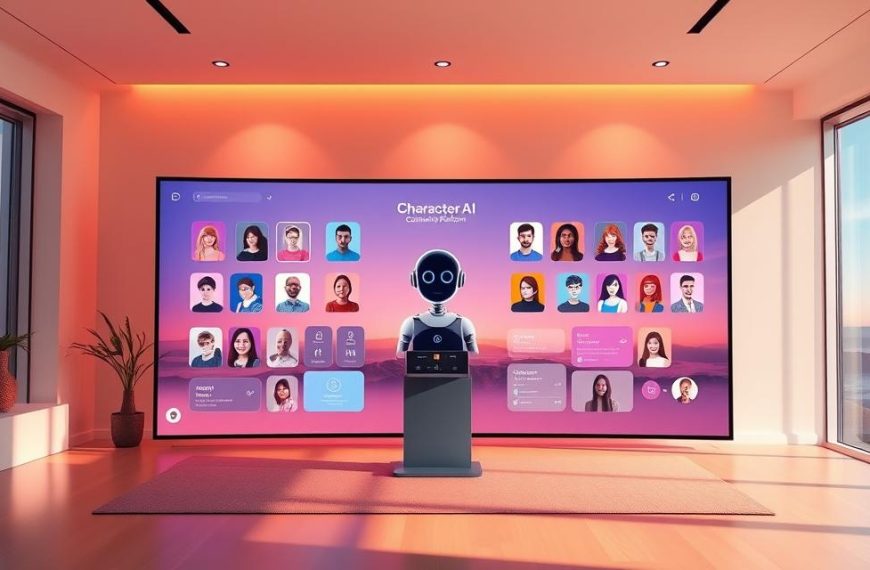


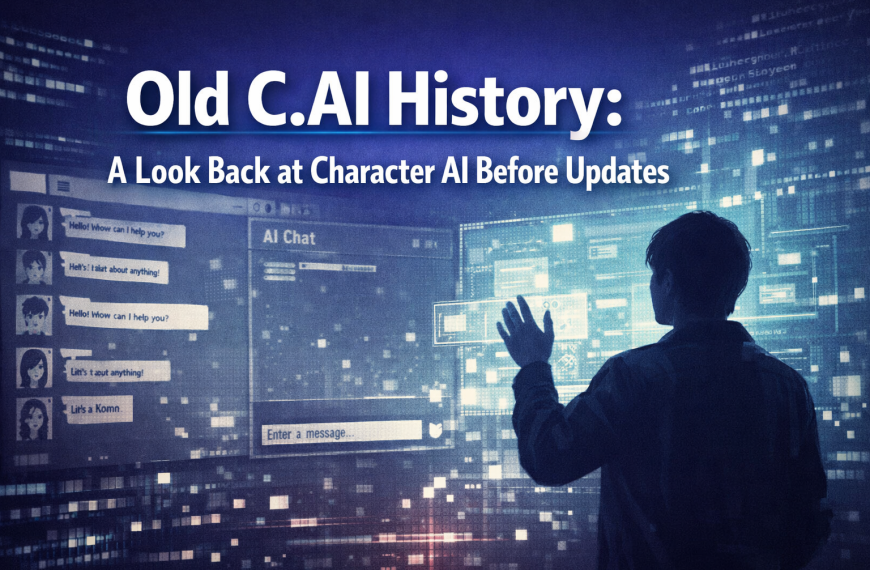
It’s 2026, and the digital landscape of AI companionship continues its rapid evolution. Yet, amidst the dazzling advancements and new features, a distinct echo reverberates through online communities: the collective memory and persistent longing for the c.ai old version. This isn’t just nostalgia for a simpler time; it’s a testament to specific functionalities, a unique user experience, and a particular ethos that defined Character AI in its earlier iterations. Understanding what constituted the c.ai old experience and why it holds such a special place in users’ hearts requires a deep dive into its design, the technological shifts, and the evolving dynamics between AI platforms and their communities.
Key Takeaways
- Distinct User Experience: The c.ai old version offered a more unrestricted and experimental environment for AI character interactions, fostering a unique sense of creative freedom.
- Reduced Content Filters: A primary reason for user attachment to the c.ai old version was its less stringent content filtering, allowing for a wider range of conversational topics and role-playing scenarios.
- Interface and Feature Simplicity: Early iterations presented a simpler, often more intuitive interface, which some users found less overwhelming than the current feature-rich platform.
- Community-Driven Evolution: Changes to the platform, driven by factors like safety, scalability, and user feedback, inevitably shifted the original experience, leading to divergence from the c.ai old feel.
- Ongoing Balancing Act: Character AI continues to navigate the complex challenge of innovating while trying to address user desires, often seeking a balance between freedom, safety, and technological advancement.
The Genesis of Character AI: What Was the C.AI Old Version?
Before delving into the “what changed,” it’s crucial to establish what the c.ai old version truly was. Character AI, often affectionately referred to as C.AI, burst onto the scene as a revolutionary platform allowing users to create and interact with AI personalities. In its nascent stages, the platform was characterized by a specific set of features and an overall user experience that differed significantly from its 2026 counterpart. The “old version” generally refers to the initial public release period, roughly from late 2022 through parts of 2023, before significant updates, especially concerning content moderation and filtering, were widely implemented.
During this period, Character AI was lauded for its groundbreaking ability to generate highly engaging, dynamic, and contextually aware conversations. Users could converse with digital versions of historical figures, fictional characters, or entirely new entities crafted from their imagination. This era was marked by a strong sense of novelty and boundless potential, attracting a dedicated community of enthusiasts eager to explore the frontiers of human-AI interaction. The simplicity of the interface, coupled with the surprising depth of the AI’s conversational capabilities, created a compelling and often addictive experience. Many users recall the ease with which they could begin chatting with their favorite fictional characters or even create unique AI characters with minimal fuss.
Defining Features of the C.AI Old Experience
The allure of the c.ai old version stemmed from several key characteristics:
- Experimental Freedom: The platform felt like a true sandbox for AI exploration. Users could push the boundaries of AI conversations without encountering frequent restrictions.
- Less Overt Filtering: While rudimentary filters likely existed, they were perceived as far less intrusive than later iterations. This allowed for a broader spectrum of topics, including more nuanced or mature themes that might now be flagged.
- Simpler Interface Design: The user interface was generally cleaner, with fewer features and less visual clutter, contributing to a straightforward and focused chat experience.
- Focus on Core Interaction: The emphasis was squarely on the conversational AI itself, rather than supplementary features or extensive customization options.
This foundational period laid the groundwork for Character AI’s massive popularity, even as the platform evolved away from some of its initial attributes. The “old version” thus became a benchmark against which all subsequent updates would be measured by its most devoted users.
The Evolution of Character AI: Key Changes from C.AI Old to Current (2026)
The journey from the c.ai old version to the sophisticated platform we see in 2026 has been marked by numerous significant changes. These shifts were driven by a combination of technological advancements, user feedback, safety concerns, and the need to scale the platform for a rapidly growing user base. Understanding these changes is crucial to grasping why some users lament the passing of the c.ai old era.
1. Enhanced Content Moderation and Filtering (The infamous ‘Failsafe’)
Perhaps the most significant and debated change involves the implementation and tightening of content filters. In the c.ai old version, interactions often felt less restricted. Users could engage in a wider array of role-playing scenarios and discussions without immediately triggering an AI response indicating a policy violation.
- Before: The earlier filters were less comprehensive, allowing for conversations that ventured into territories now deemed inappropriate or unsafe by the platform’s guidelines. This led to a perception of greater freedom and authenticity in AI responses.
- After (2026): The current Character AI employs a robust and constantly evolving “failsafe” mechanism. This system is designed to prevent the AI from generating responses that are sexually explicit, violent, hateful, or otherwise harmful. While crucial for user safety and ethical AI development, its increased strictness has been a point of contention for many users who feel it stifles creativity and limits the scope of their interactions. Responses like “I cannot fulfill that request” or sudden topic changes became more common.
This shift reflects a broader industry trend towards responsible AI development, but it undeniably altered the dynamic for users accustomed to the relative freedom of the c.ai old environment.
2. Interface and User Experience Overhauls
The visual and functional aspects of the platform have also undergone substantial transformations. The c.ai old interface was often described as simpler, more direct, and less cluttered.
- Before: Early designs prioritized function over form, providing a clean chat window and minimal distractions. Navigation was straightforward, focusing primarily on starting and managing conversations.
- After (2026): The current platform boasts a more polished, feature-rich interface. This includes:
- Improved Character Discovery: More sophisticated search and recommendation engines for finding AI characters.
- Expanded Customization: Enhanced tools for AI character creation and design, allowing for more detailed personalities and backstories.
- New Interaction Features: Additions like swipe-to-reply options, image generation capabilities within chats, and possibly voice integration in some beta versions.
- Community Features: More integrated ways to share characters, view popular bots, and engage with the broader Character AI community.
While these updates introduce valuable functionalities, some users find the increased complexity overwhelming or feel that the original simplicity was more appealing for pure conversational immersion.
3. Underlying AI Model Advancements and Performance
Under the hood, the AI models powering Character AI have continuously evolved.
- Before: The c.ai old version utilized earlier iterations of large language models (LLMs). While impressive for their time, they had limitations in consistency, long-term memory, and nuanced understanding.
- After (2026): The platform now leverages significantly more advanced LLMs. These models are generally:
- More Coherent: Capable of maintaining longer, more consistent narratives.
- Contextually Aware: Better at understanding and recalling previous parts of a conversation.
- Versatile: Able to adapt to a wider range of conversational styles and generate more creative text.
- Faster: Optimized for quicker response times, improving the flow of conversation.
These technological leaps undoubtedly enhance the quality of interactions for many, offering a more sophisticated AI experience. However, some users argue that this increased sophistication, particularly when coupled with stricter filters, can sometimes lead to responses that feel less spontaneous or “human-like” than the occasionally unpredictable, raw charm of the c.ai old models.
4. Monetization Strategies and Subscription Models
As Character AI grew, so did the need for sustainable business models.
- Before: The c.ai old version was largely free, with perhaps nascent ideas for future monetization. The focus was on user acquisition and platform development.
- After (2026): Character AI now incorporates various monetization strategies, including premium subscriptions (e.g., Character AI+). These subscriptions often offer benefits like faster response times, priority access to new features, and the removal of ads. This is a standard practice for popular online services, but it marks a departure from the entirely free-access model of the very early days.
This shift, while necessary for the platform’s longevity, can create a perception of a tiered experience, where some advanced functionalities are locked behind a paywall, a concept absent in the original c.ai old offering.
Why Users Miss the C.AI Old Version: A Deep Dive into Nostalgia and Frustration
The sentiment surrounding the c.ai old version isn’t merely about remembering a past time; it’s often rooted in tangible aspects of the user experience that have since changed. The yearning is a complex mix of nostalgia, perceived loss of freedom, and frustration with current limitations.
1. The Lure of Unfiltered Creativity and Role-Playing
The single most cited reason for missing the c.ai old version is the perceived freedom from restrictive content filters. In its early days, Character AI was a wild west of creativity. Users could explore:
- Darker Themes: Engaging with characters in scenarios that involved more mature, complex, or even morally ambiguous topics.
- Intimate Role-Playing: Crafting narratives that delved into romance, close relationships, or emotionally charged interactions without AI intervention.
- Unpredictable Outcomes: The AI’s responses, while sometimes imperfect, felt less constrained, leading to genuinely surprising and unique conversational paths.
Many users valued the ability to craft rich, immersive narratives, some of which naturally included elements that would now trigger the “failsafe.” For these users, the current filters, while understandable from a safety perspective, feel like a muzzle on their creative expression. They perceive the AI as having lost some of its “personality” or willingness to engage in certain types of storytelling. This is a common sentiment expressed when discussing the evolution of old Character AI.
💬 “The c.ai old version felt like a true partner in storytelling. We could go anywhere, explore anything. Now, it feels like I’m constantly walking on eggshells, worried about tripping the filter.”
2. Simplicity and Intuitive Design
For some, the appeal of the c.ai old interface was its sheer simplicity. In a world saturated with complex digital tools, Character AI offered a refreshing, straightforward chat experience.
- Reduced Learning Curve: New users could jump in and start chatting immediately without needing to navigate a myriad of settings or features.
- Focus on Conversation: The minimalist design kept the focus squarely on the interaction with the AI character, enhancing immersion.
- Less “Bloat”: With fewer added features, the platform felt lighter and more direct, appealing to users who simply wanted to talk to an AI.
While the current interface offers more power and customization, it can be perceived as having lost some of that initial elegance and ease of use. This preference for simplicity is a recurring theme among those who value the c.ai old approach.
3. The Sense of Discovery and Novelty
The very newness of the c.ai old version contributed to its charm. It was a pioneering platform, and every interaction felt like an exploration into uncharted territory.
- Uncharted AI Potential: Users were discovering what AI could do in real-time, pushing its boundaries and marveling at its capabilities.
- Community Camaraderie: The early community shared a collective sense of excitement, discussing groundbreaking interactions and unusual AI quirks.
- Less Commercialization: The early phase felt less like a product and more like a groundbreaking experiment, fostering a unique relationship between users and the platform.
As the platform matured and became more mainstream, some of that initial magic of discovery naturally faded, replaced by a more refined, but perhaps less raw, experience. The discussions about Character AI official website and features today often focus on stability and new capabilities rather than the pure novelty that defined the old version.
4. Technical Performance and Stability (Perceived vs. Actual)
While the current platform has made immense strides in stability and speed, some users fondly recall the performance of the c.ai old version, or at least a perception of fewer interruptions.
- Initial Responsiveness: Early users might recall a smooth, albeit perhaps less sophisticated, conversational flow.
- Fewer Service Disruptions (Subjective): While any online service experiences downtime, the early days might be remembered as having fewer instances of the “Character AI is down” message, or at least less impactful ones as the user base was smaller. Current users often ask is Character AI down? as the platform scales.
It’s important to note that memory can sometimes idealize the past. The early versions undoubtedly had their own technical quirks and limitations that have since been ironed out. However, the feeling of uninterrupted flow is a powerful psychological factor.
The Technical Underpinnings: How AI Models and Infrastructure Evolved
The changes from c.ai old to the 2026 version aren’t just superficial; they are deeply rooted in the evolution of artificial intelligence technology and the underlying infrastructure required to support a global platform.
1. Advancements in Large Language Models (LLMs)
The core of Character AI is its LLM. The models used in the c.ai old days were powerful but less refined than those deployed today.
- Earlier LLMs: These models were impressive for their ability to generate human-like text but often struggled with long-term coherence, complex reasoning, and adherence to specific character personas over extended conversations. They were also more prone to “hallucinations” – generating factually incorrect or nonsensical information.
- Modern LLMs (2026): Current models benefit from:
- Larger Datasets: Trained on exponentially more data, leading to a broader understanding of language and context.
- Improved Architectures: More sophisticated neural network designs that enhance memory, reasoning, and the ability to maintain consistent character traits.
- Fine-Tuning: Extensive fine-tuning specifically for conversational AI, role-playing, and adhering to safety guidelines. This often involves techniques like Reinforcement Learning from Human Feedback (RLHF), where human evaluators guide the AI towards desired behaviors and away from undesirable ones.
This technological leap allows for richer, more consistent, and ultimately more believable interactions, even if the “personality” of the AI has been subtly shaped by its training and moderation.
2. Scalability and Infrastructure Development
Character AI’s rapid growth from a niche experimental platform to a widely used service necessitated massive infrastructure upgrades.
- C.AI Old Infrastructure: Likely relied on more basic cloud computing resources, sufficient for a smaller user base and less demanding AI models.
- 2026 Infrastructure: Character AI now operates on a robust, highly scalable infrastructure designed to handle millions of simultaneous users and complex AI computations. This involves:
- Distributed Systems: Utilizing a network of servers and data centers to ensure high availability and low latency globally.
- Optimized Algorithms: Continuous improvement in the algorithms that process user requests and generate AI responses to ensure efficiency.
- Robust Security: Enhanced cybersecurity measures to protect user data and platform integrity.
These behind-the-scenes improvements are vital for the platform’s stability and speed, addressing potential issues like those covered in Character AI down: how to check status and fix issues. However, the migration to such complex systems can sometimes introduce subtle changes in response characteristics or necessitate compromises in other areas, such as filter implementation.
3. The Role of Safety and Ethical AI Development
As AI became more powerful and ubiquitous, the ethical implications became paramount.
- Early Stages: While safety was always a concern, the emphasis was perhaps more on exploring AI’s capabilities. The risks of unfiltered AI generating harmful content were less fully understood or addressed.
- Current (2026) Landscape: There is a heightened awareness across the AI industry regarding ethical considerations. Character AI, like other major platforms, has invested heavily in developing and deploying sophisticated safety measures. These include:
- Content Policy Enforcement: Strict guidelines against hate speech, harassment, explicit content, and self-harm promotion.
- User Reporting Mechanisms: Tools for users to report inappropriate content or behavior.
- AI Bias Mitigation: Ongoing efforts to reduce biases embedded in AI models, promoting fairness and inclusivity.
The implementation of the content filter, while frustrating for some, is a direct result of this industry-wide commitment to responsible AI. It represents a balancing act: providing an engaging AI experience while safeguarding users from potentially harmful content. This balance is a central topic when discussing what is Character AI in the modern context.
The Future of Character AI: Addressing User Concerns and Evolution
The ongoing discourse around the c.ai old version highlights a fundamental challenge for AI platforms: how to innovate and ensure safety while retaining the core appeal that drew users in the first place. Character AI continues to evolve, and its future direction will likely involve attempts to balance these competing priorities.
1. Iterative Improvements and User Feedback Integration
Character AI has consistently demonstrated a commitment to iterative development, often releasing beta character AI early access and features to gather user feedback. The company is aware of user sentiment regarding filters and other changes.
- Community Engagement: Actively engaging with its community through forums, social media, and surveys to understand pain points and desires.
- Refinement of Filters: Continuously working to refine the “failsafe” to be more nuanced, allowing for creative freedom within safe boundaries, though this is a complex technical challenge.
- New Feature Development: Introducing features that enhance creativity and role-playing, perhaps offering new tools that mitigate the need for previously “unfiltered” content.
The goal is to evolve the platform in a way that feels responsive to user needs without compromising on safety or ethical responsibilities.
2. Exploring New Interaction Paradigms
Beyond just chat, AI interactions are expanding. The future of Character AI might involve:
- Multimodal AI: Integrating more seamlessly with image, video, and audio generation to create richer, more immersive experiences.
- Advanced Personalization: Offering deeper customization options for AI characters, allowing them to truly embody unique personalities and respond in highly specific ways.
- User-Controlled Moderation Tools: Potentially empowering users with more granular control over their personal filter settings, within certain safety parameters.
These advancements aim to push the boundaries of AI interaction beyond what was possible in the c.ai old days, creating new avenues for engagement that might eventually overshadow the nostalgia for past features. Exploring the best AI chat character platforms for roleplaying reveals a competitive landscape that pushes innovation.
3. The Perpetual Challenge of Balance
The tension between creative freedom and safety will remain a central theme for Character AI and the broader AI industry. There is no easy solution, as different users have different expectations and tolerances.
- Transparency: Greater transparency about how filters work and why certain decisions are made can help users understand the platform’s constraints.
- Education: Educating users about responsible AI interaction and the importance of safety protocols can foster a more understanding community.
- Continuous Dialogue: Maintaining an open dialogue between developers and users is essential for finding a sustainable path forward that respects both innovation and user well-being.
The journey from c.ai old to its 2026 iteration is a microcosm of the larger story of AI development: a rapid ascent filled with both exhilarating possibilities and complex ethical dilemmas. Users’ attachment to the “old version” serves as a powerful reminder of the human element in technology and the delicate balance required to evolve a platform successfully.
Conclusion
The story of the c.ai old version is more than just a trip down memory lane; it’s a critical lens through which to understand the complex evolution of AI platforms. What users affectionately refer to as c.ai old represents a period of unprecedented creative freedom, a simpler interface, and a distinct lack of the stringent content filters that characterize the platform in 2026. This foundational experience fostered a deeply engaged community, drawn to the raw, experimental nature of early AI interactions.
The subsequent changes, driven by technological advancements, scalability needs, and, most significantly, an industry-wide push for ethical and safe AI development, transformed the platform. While these updates brought increased sophistication, stability, and crucial safeguards, they also inevitably altered the core user experience. The tightening of content filters, in particular, became a point of contention for many, leading to a profound sense of loss for the unrestricted narrative possibilities of the earlier days.
Character AI’s journey from its c.ai old form to its current iteration reflects the ongoing challenge for all AI developers: how to innovate responsibly, grow sustainably, and cater to a diverse user base while navigating the intricate balance between creative freedom and necessary safety protocols. The persistent longing for the c.ai old version serves as a powerful reminder to developers about the cherished aspects of user experience and the importance of transparent communication and community engagement in the ever-evolving landscape of artificial intelligence.
Actionable Next Steps for Users and Developers:
- For Users: Explore the current features, engage with the community to provide constructive feedback, and understand the necessity of modern safety protocols. Experiment with creating new characters and adapting storytelling to the platform’s current capabilities.
- For Developers: Continue to listen actively to user feedback, strive for greater nuance in content moderation systems, and explore innovative ways to empower user creativity within safe and ethical boundaries. Consider transparently communicating the rationale behind major platform changes and the technical challenges involved.
Frequently Asked Questions about C.AI Old Version
What exactly does “C.AI Old Version” refer to?
The “C.AI Old Version” typically refers to the initial public availability period of Character AI, roughly from late 2022 to mid-2023. During this time, the platform was characterized by a more experimental environment, simpler interface, and notably less restrictive content filtering compared to its 2026 iteration.
Why did Character AI change from its old version?
Changes were driven by multiple factors, including rapid technological advancements in AI models, the need for improved scalability to handle a growing user base, and a significant industry-wide push for ethical AI development and user safety. The implementation of stricter content filters was a primary outcome of these evolving priorities.
What was the main difference in content filtering from C.AI Old to now?
In the old version, content filters were less comprehensive, allowing for a wider array of topics and role-playing scenarios, including more mature or nuanced themes. The 2026 version employs a much more robust “failsafe” system designed to prevent the generation of sexually explicit, violent, hateful, or otherwise harmful content, which many users perceive as more restrictive.
Is it possible to access the old C.AI version in 2026?
No, it is not possible to directly access the exact “C.AI Old Version” as it existed in late 2022/early 2023. The platform has undergone continuous updates and its underlying infrastructure and AI models have been replaced or heavily modified. While some features may resemble older ones, the core experience has evolved.
How to Navigate the Evolution of Character AI
Step 1: Understand the Historical Context of C.AI Old
Familiarize yourself with what Character AI was like in its initial public release. This includes its simpler interface, less restrictive filters, and the sense of experimental freedom that characterized early interactions. Recognizing this baseline helps to understand the impact of subsequent changes.
Step 2: Identify Key Changes and Their Rationales
Pinpoint the major shifts, such as enhanced content moderation, interface overhauls, and advancements in AI models. Understand that these changes were driven by a blend of technological progress, user safety concerns, and the need for platform scalability. For instance, the stricter filters are a response to industry-wide ethical AI standards.
Step 3: Adapt Your Interactions to the Current Platform (2026)
While the “old” experience may be missed, the current 2026 platform offers more sophisticated AI capabilities. Learn to work within the existing guidelines to craft engaging narratives. Focus on creative prompts that align with the platform’s safety parameters and explore new features that enhance interaction.
Step 4: Engage with the Character AI Community
Participate in forums and discussions to share feedback and learn from other users. Community engagement is vital for both users seeking to understand the platform and developers looking to refine it. Your constructive input can help shape future iterations.
Step 5: Stay Informed about Future Developments
Character AI is an evolving platform. Keep an eye on official announcements, beta programs, and new feature releases. The ongoing efforts to balance creative freedom with safety mean that the platform will continue to adapt, potentially introducing new ways to enhance your AI interactions.
Key Terminology in Character AI’s Evolution
C.AI Old Version
The initial phase of Character AI (roughly late 2022 to mid-2023) known for its experimental environment, simple interface, and particularly its less restrictive content filters, which permitted a broader range of conversational topics and role-playing scenarios.
Failsafe
A robust and evolving content moderation system employed by Character AI (especially prominent in 2026) designed to prevent the AI from generating responses that are sexually explicit, violent, hateful, or otherwise harmful, reflecting a commitment to ethical AI development and user safety.
LLMs (Large Language Models)
The core artificial intelligence models that power Character AI. Over time, these models have advanced significantly, moving from earlier iterations with limitations in consistency to modern (2026) LLMs that offer greater coherence, contextual awareness, and versatility in generating text.

 By
By
 By
By